
SIF Equity Ex-Top 100 Long-Short Funds let managers invest in mid and small caps and short up to 25% of the portfolio. We explain how they differ from regular mutual funds, fact-check the claims about microcaps and concentrated bets, and cover the rules, taxation, risks and who they suit.
SIF Equity Ex-Top 100 Long-Short Funds, explained without the hype
They are the hottest new product in Indian investing. Here is what they can actually do that a regular small or mid cap mutual fund cannot, and a fact-check of two claims you have probably heard.
The short version
The Equity Ex Top 100 SIF story
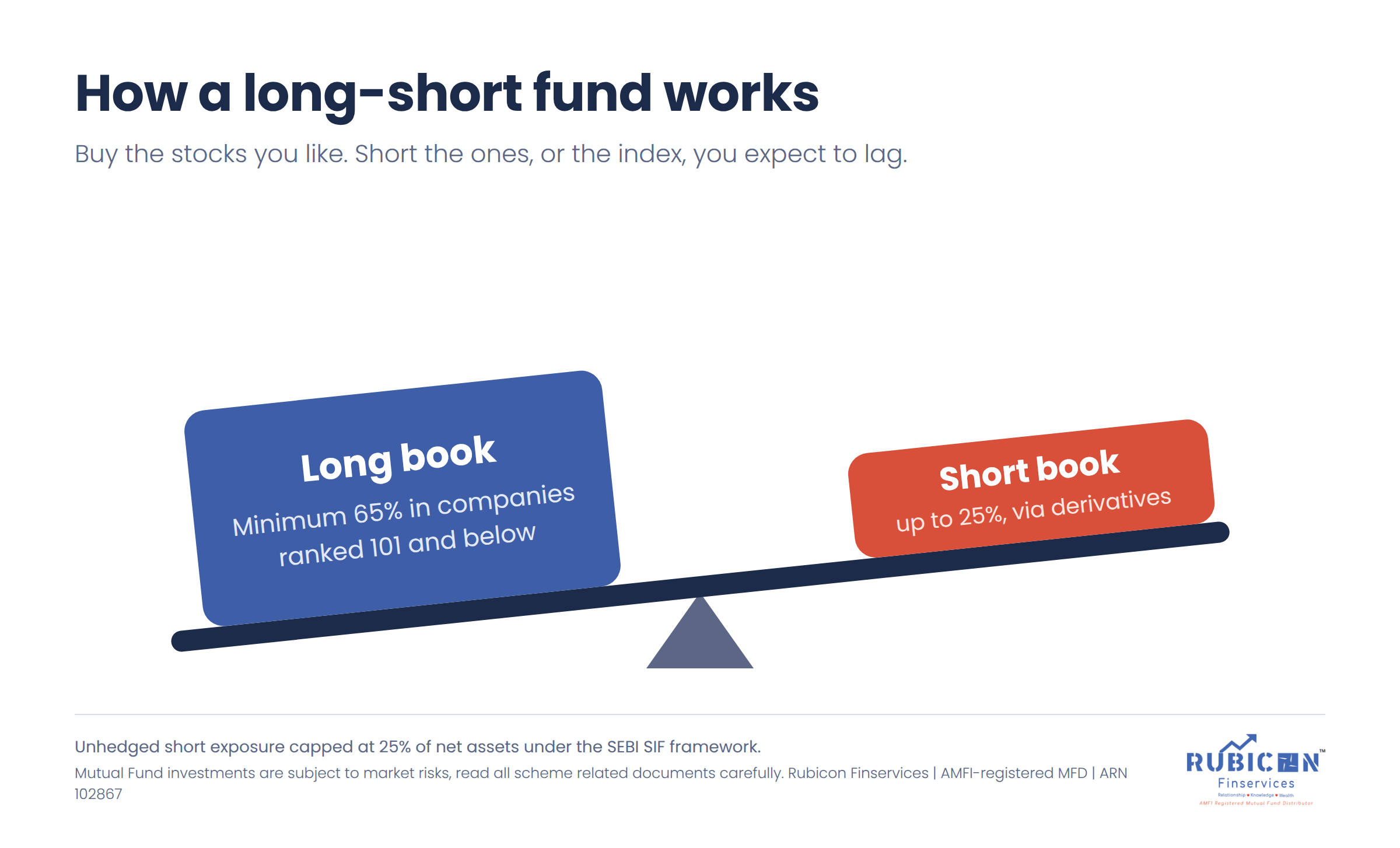
- An Equity Ex-Top 100 Long-Short Fund keeps at least 65% in companies ranked below the top 100, and can run a short book of up to 25% of net assets through derivatives.
- Mutual funds are not barred from microcaps. The SIF’s edge in small companies comes from size and a higher ownership ceiling, not from a wider list of permitted stocks.
- The single-stock limit is 10% of NAV for both products. What changes is the freedom to hedge, to short, and to hold a bigger slice of a small company.
What a SIF is, in one minute
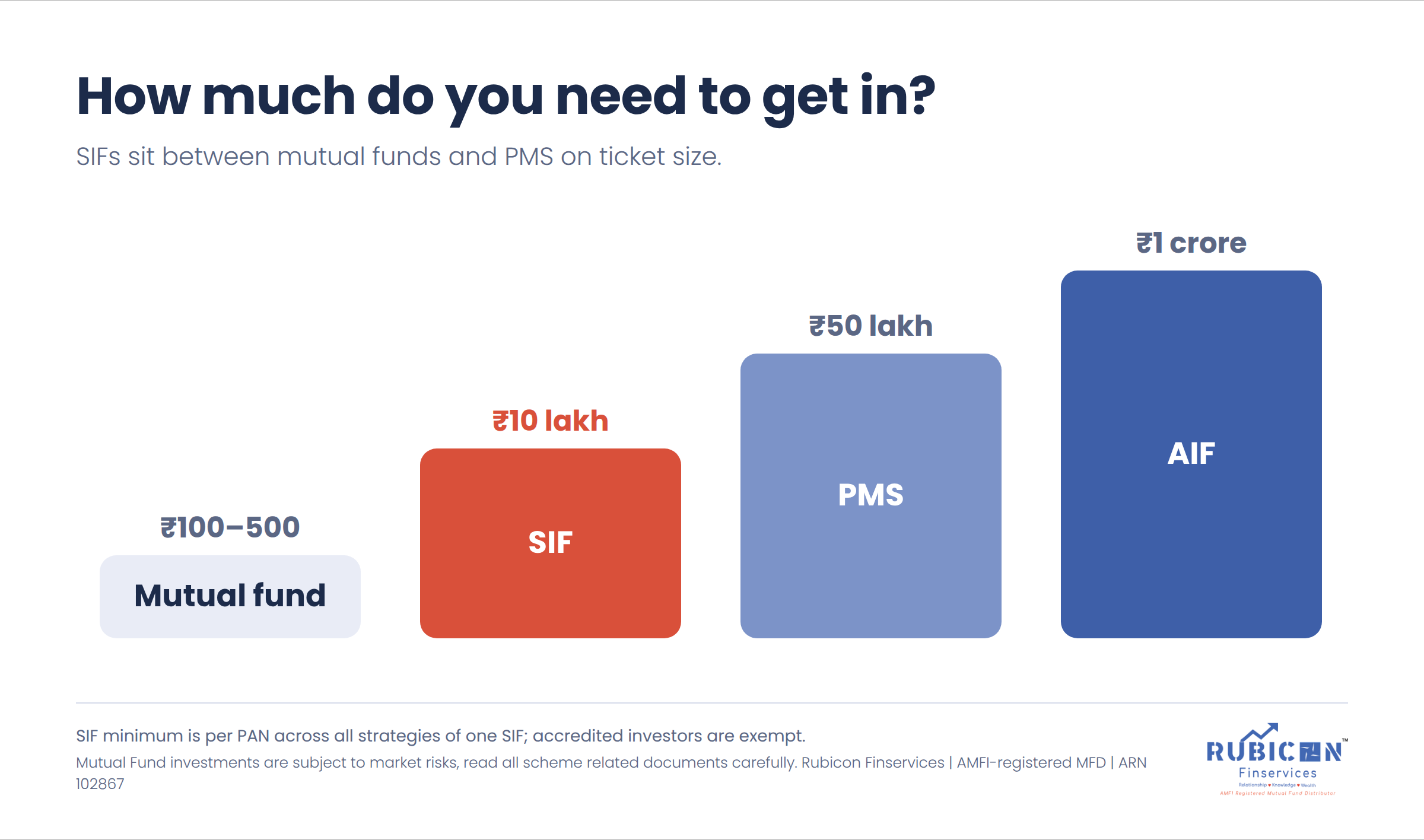
A Specialised Investment Fund is a product SEBI created in early 2025 to fill the gap between mutual funds and PMS. It is run by a mutual fund house, sits under the same Mutual Fund Regulations, carries the same fund-level tax treatment, and publishes NAVs the same way. What it gets in exchange for a higher entry ticket is room to use strategies a mutual fund cannot, chiefly short selling through derivatives.
SEBI allows seven SIF strategies across equity, debt and hybrid. On the equity side there are three: the Equity Long-Short Fund (at least 80% in equity, any market cap), the Sector Rotation Long-Short Fund (up to four sectors), and the one this article is about, the Equity Ex-Top 100 Long-Short Fund.
The Ex-Top 100 rulebook
“Ex-Top 100” simply means everything outside the 100 largest listed companies on AMFI’s half-yearly market-cap list. That is the mid cap band (ranks 101–250) and the small cap band (251 onwards), which includes the long tail people call microcaps.
The core rules, as laid out in SEBI’s framework and repeated in every fund’s Investment Strategy Information Document (ISID):
- Long exposure At least 65% in equity and equity-related instruments of Ex-Top 100 companies. The balance can go to large caps, debt, cash or other permitted assets.
- Short exposure Up to 25% of net assets in unhedged short positions, only through derivatives.
- Single stock Max 10% of the strategy’s NAV in one company.
- Ownership ceiling The SIF across all its strategies can hold up to 15% of a company’s voting capital, and that 15% includes whatever the same fund house’s mutual funds already own.
- Structure Open-ended, close-ended or interval, as the ISID specifies. Exit loads vary by fund.
- Ticket ₹10 lakh minimum per PAN across the SIF’s strategies. SIPs are allowed as long as you stay above the threshold.
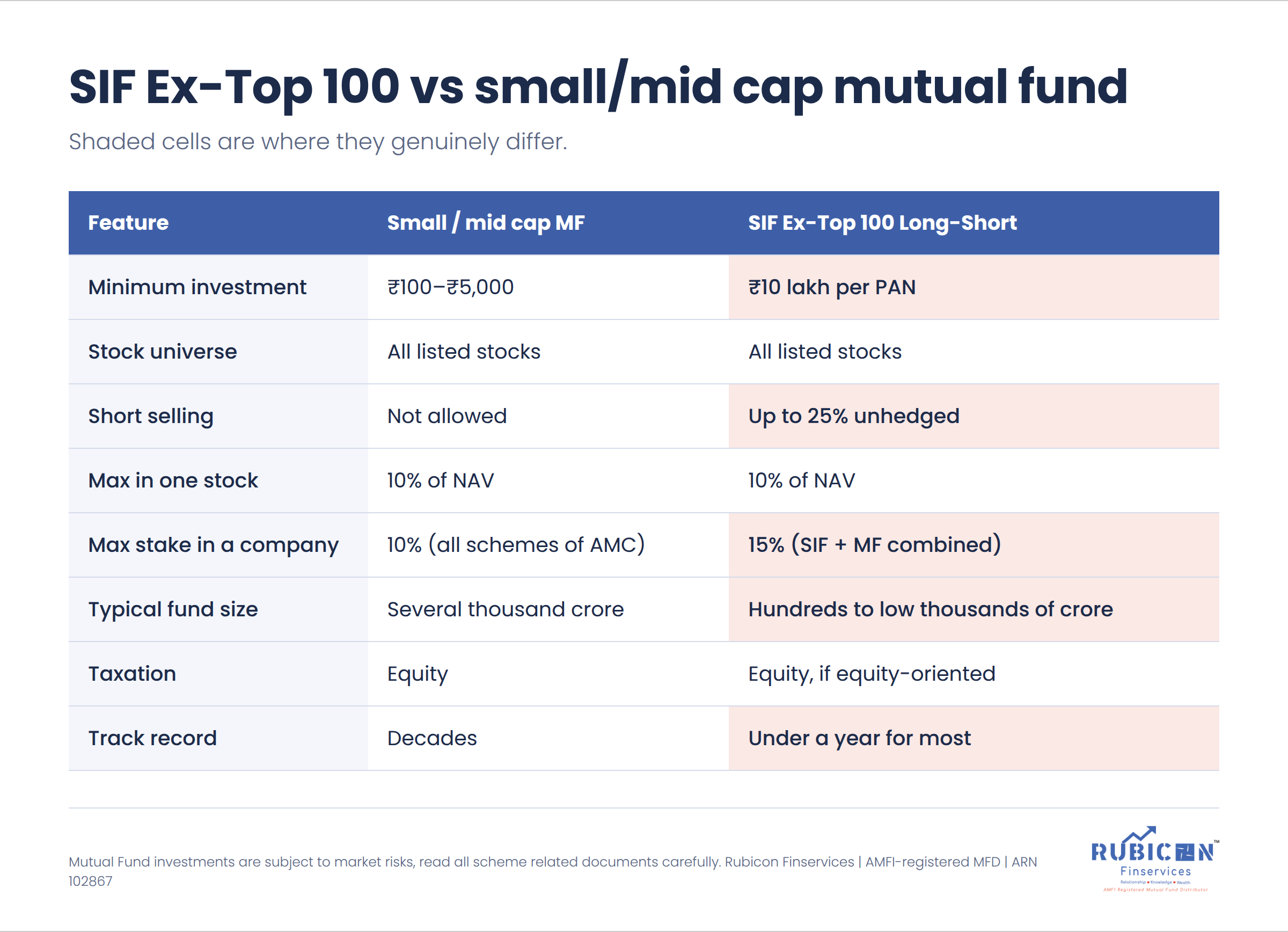
SIF Ex-Top 100 vs a small or mid cap mutual fund
Fact-check: “SIFs can buy microcaps that mutual funds can’t”
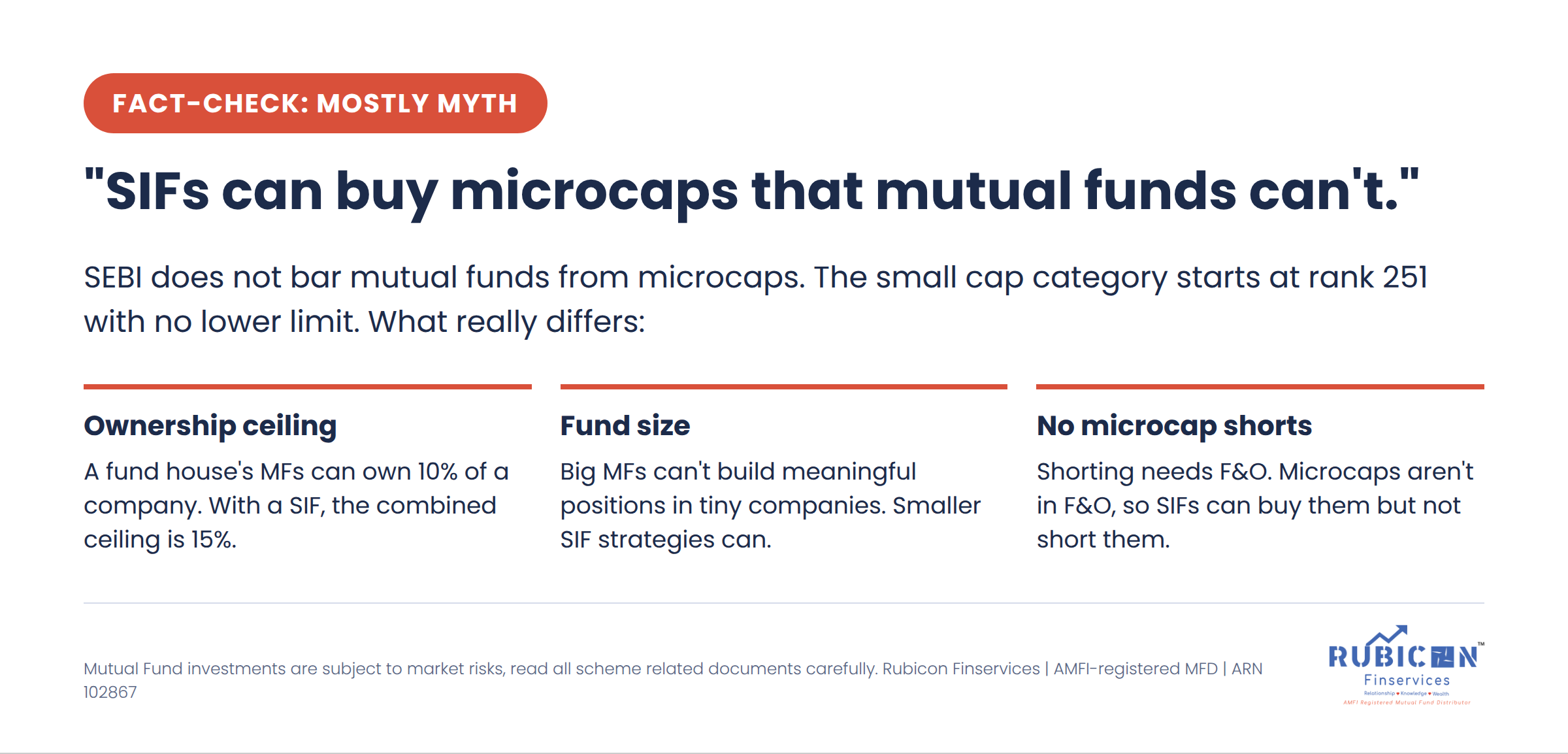
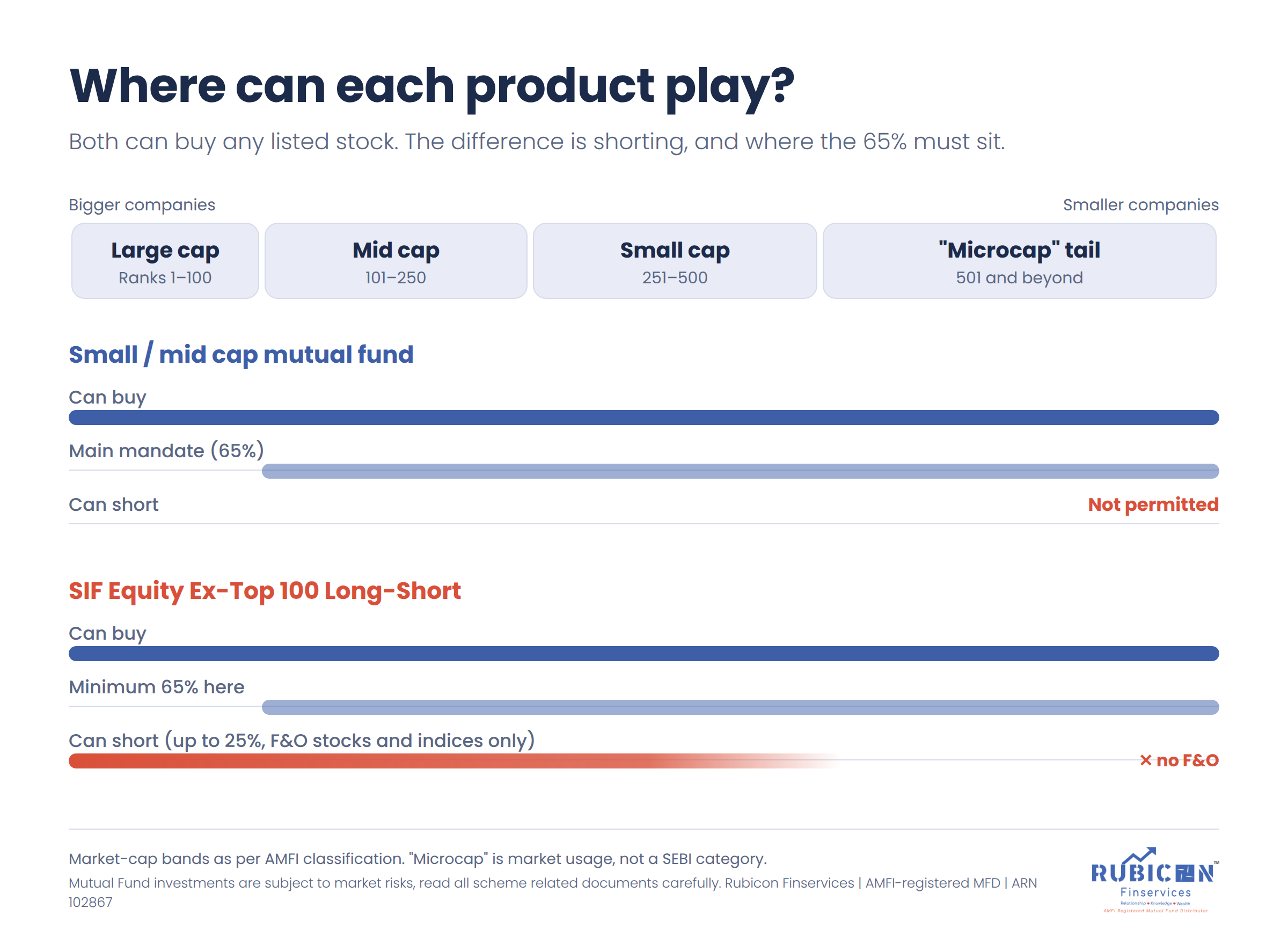
Verdict: mostly myth. Regulation does not stop a mutual fund from buying a microcap. SEBI’s small cap category starts at rank 251 and has no lower bound. There is no official “microcap” definition at all; the term is market slang for companies below roughly rank 500. Small cap funds do hold such stocks, and a passive microcap index fund exists. So the permitted universe for buying is the same for both products.
So why does the claim keep circulating? Because in practice, large mutual funds struggle to own microcaps in a meaningful way, and SIFs struggle less. Three reasons:
- 1The ownership ceiling bites in small companies. A fund house’s mutual fund schemes together cannot own more than 10% of any company. A SIF gets headroom up to 15% (including what the house’s mutual funds hold). In a large company, nobody hits these limits. In a ₹1,000 crore company, 10% is just ₹100 crore.
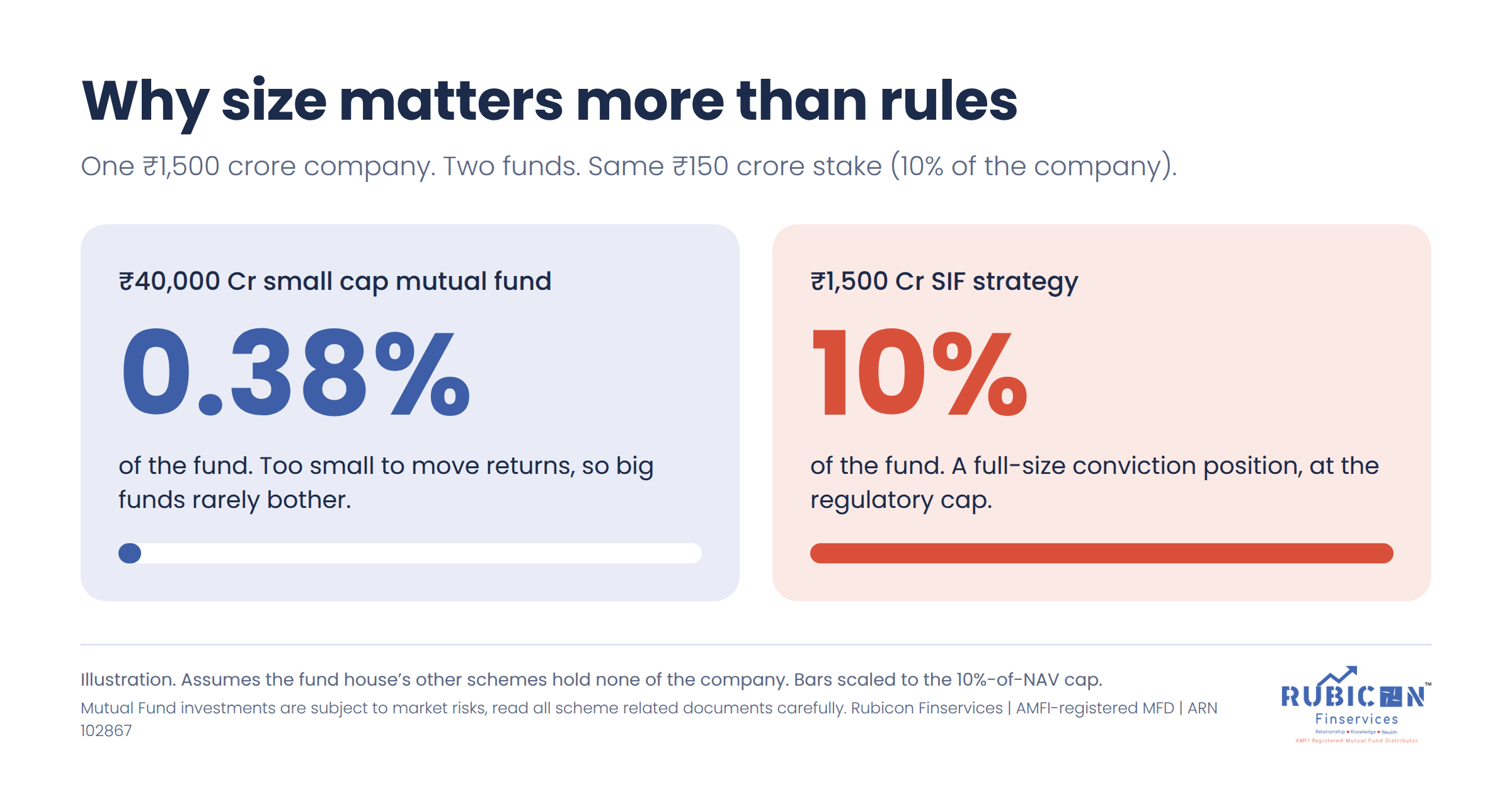
- 2Size makes small positions pointless. Take a ₹1,500 crore company. A 10% stake is ₹150 crore. For a ₹40,000 crore small cap fund, that is under 0.4% of the portfolio, too small to move returns, so the manager rarely bothers. For a ₹1,500 crore SIF strategy, the same ₹150 crore is a full 10% conviction position. One caveat: if the fund house’s mutual funds already own 10% of a company, the SIF can add only 5% more, since the 15% ceiling is shared.
- 3Liquidity stress tests. Since 2024, mid and small cap mutual funds disclose how many days they would need to sell a chunk of their portfolio. Illiquid microcaps make those numbers look worse, which nudges big funds toward more liquid names.
One more twist worth knowing: the short side of an Ex-Top 100 fund is actually narrower than the long side. Individual stocks can only be shorted through stock futures and options, and exchanges admit a stock to F&O only if it ranks among roughly the top 500 companies and meets liquidity tests. Microcaps never qualify. So these funds can buy microcaps but cannot short them. Their shorts will be mid cap F&O names or index derivatives.
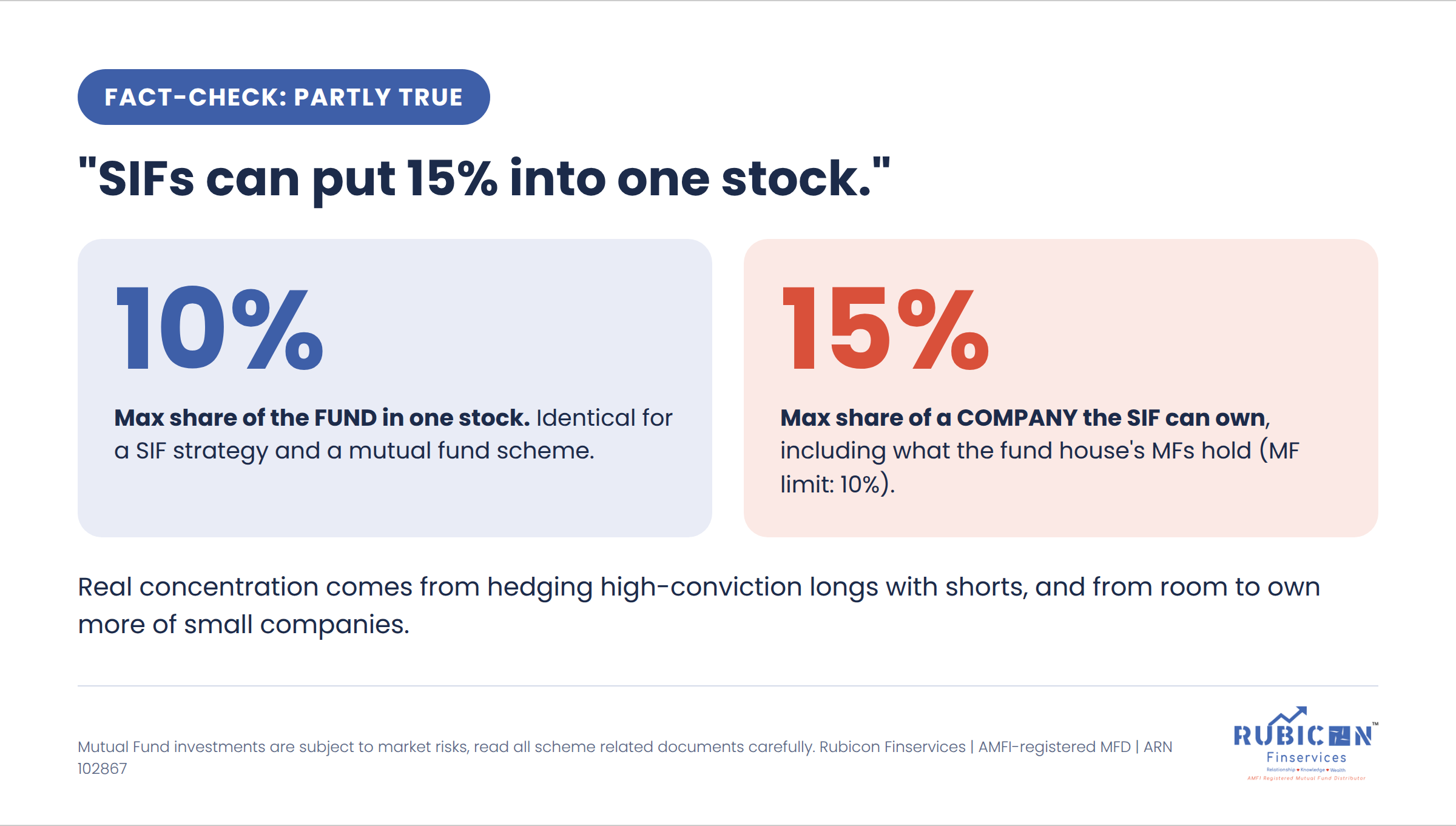
Verdict: partly true. The single-stock limit is identical: 10% of NAV. Many articles say SIFs can put 15% into one stock. That mixes up two different limits. The 15% is the share of a company the SIF may own; the cap on how much of the fund sits in one stock remains 10%, exactly as for a mutual fund.
Where concentration genuinely becomes easier:
- Hedged conviction. A manager who wants to own 20 high-conviction smaller companies can short an index against them to reduce market risk. A long-only fund carrying the same 20 names would carry the full market swing, which is why most mutual funds spread across 60–120 stocks.
- Room in small companies. A smaller fund with a 15% ownership ceiling can build full-size positions in companies a large mutual fund can only nibble at.
- Paired trades. Long one company, short a weaker peer in the same sector, and the result depends mainly on which business does better, not on where the market goes.
How a long-short book behaves
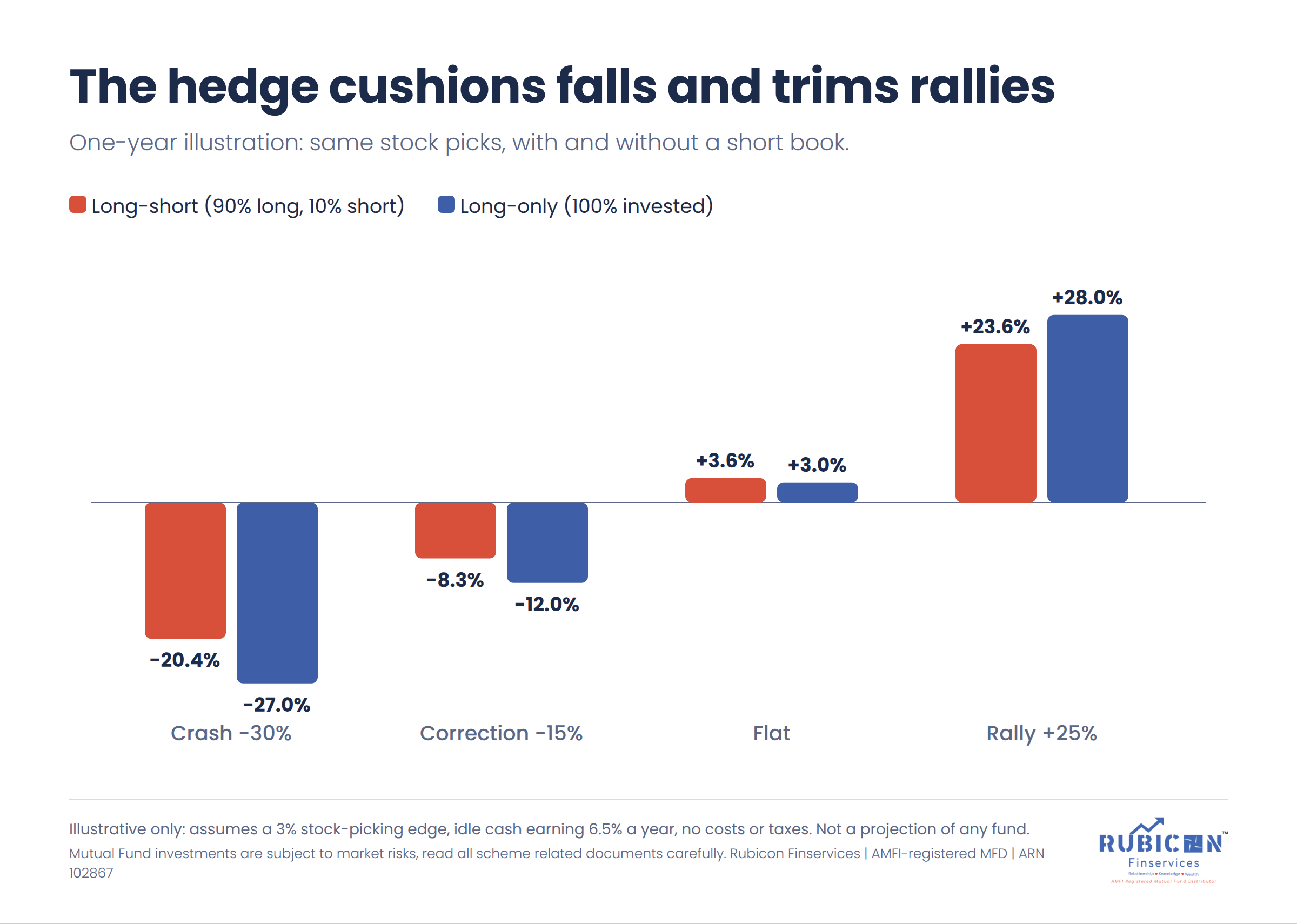
The chart below is a simplified one-year picture: a fund 90% long and 10% short, next to a fully invested long-only fund holding the same stock picks, across four market scenarios.
Notice the trade-off. In a crash the short book cushions the fall. In a strong rally it drags. And if the stock-picking edge turns negative, both books hurt you at once: the longs lag and the shorts rise. A long-short fund is a bet on the manager’s skill more than on the market.
How fast SIFs are growing
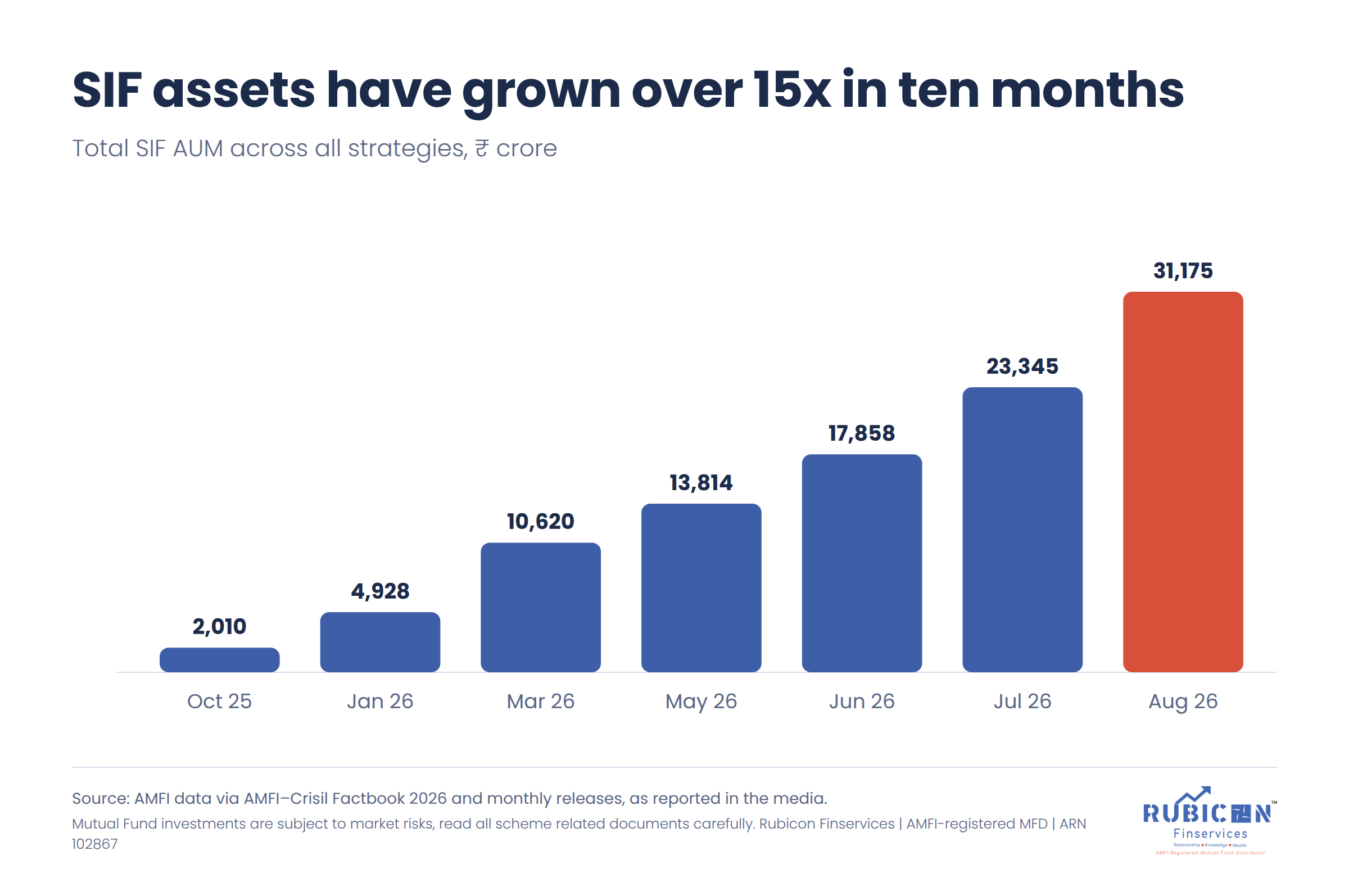
The category has gone from ₹2,010 crore in October 2025 to over ₹31,000 crore by August 2026, more than 15 times in ten months.
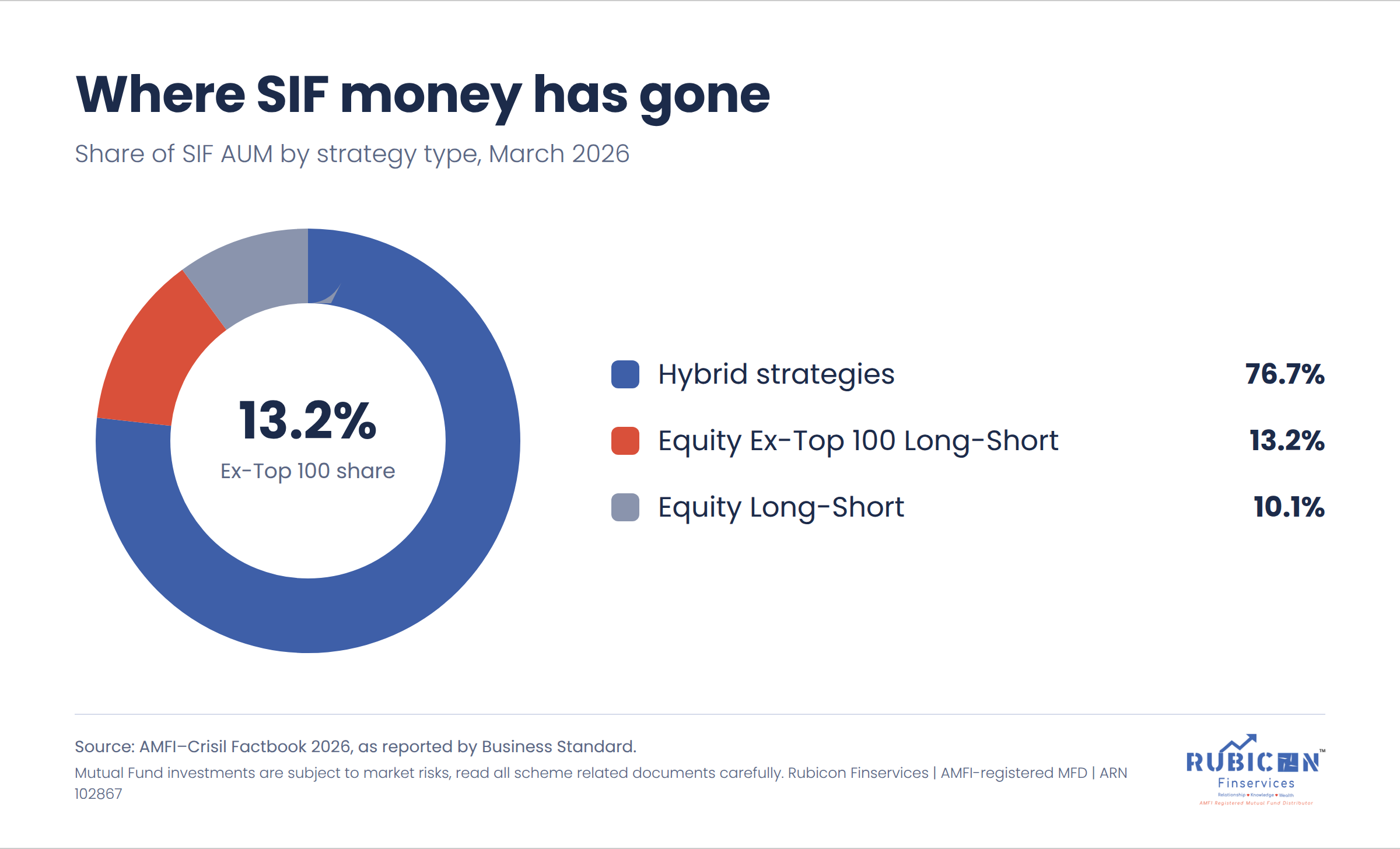
Most of that money has gone to hybrid strategies, which investors treat as a steadier alternative to arbitrage and debt. Equity Ex-Top 100 strategies are a smaller slice, but a bigger one than plain equity long-short.
Risks to weigh before you invest
- Almost no track record. Most strategies are months old. Early returns across the category have been mixed, and a few months say little about how a manager handles a full cycle.
- Short-side risk. Losses on a short position have no ceiling in theory. A short squeeze in a mid cap F&O stock can hurt quickly.
- “Long-short” in name only. SEBI sets a maximum for shorts but no minimum. A fund could stay near-fully long and behave like an ordinary small cap fund with a higher ticket.
- Small cap liquidity. In a panic, smaller stocks can be hard to sell. Check the ISID for redemption terms and whether the strategy is open-ended or interval.
- The ₹10 lakh rule cuts both ways. If you redeem below the threshold, you generally have to exit the SIF entirely. A market fall that takes you under it does not force a sale, but limits partial redemptions.
How SIFs are taxed
SIFs inherit the mutual fund pass-through: no tax inside the fund, gains taxed only when you redeem. An equity-oriented strategy is taxed like an equity mutual fund: 12.5% on long-term gains (held over 12 months) above the ₹1.25 lakh annual exemption, and 20% on short-term gains.
Is an Ex-Top 100 SIF for you?
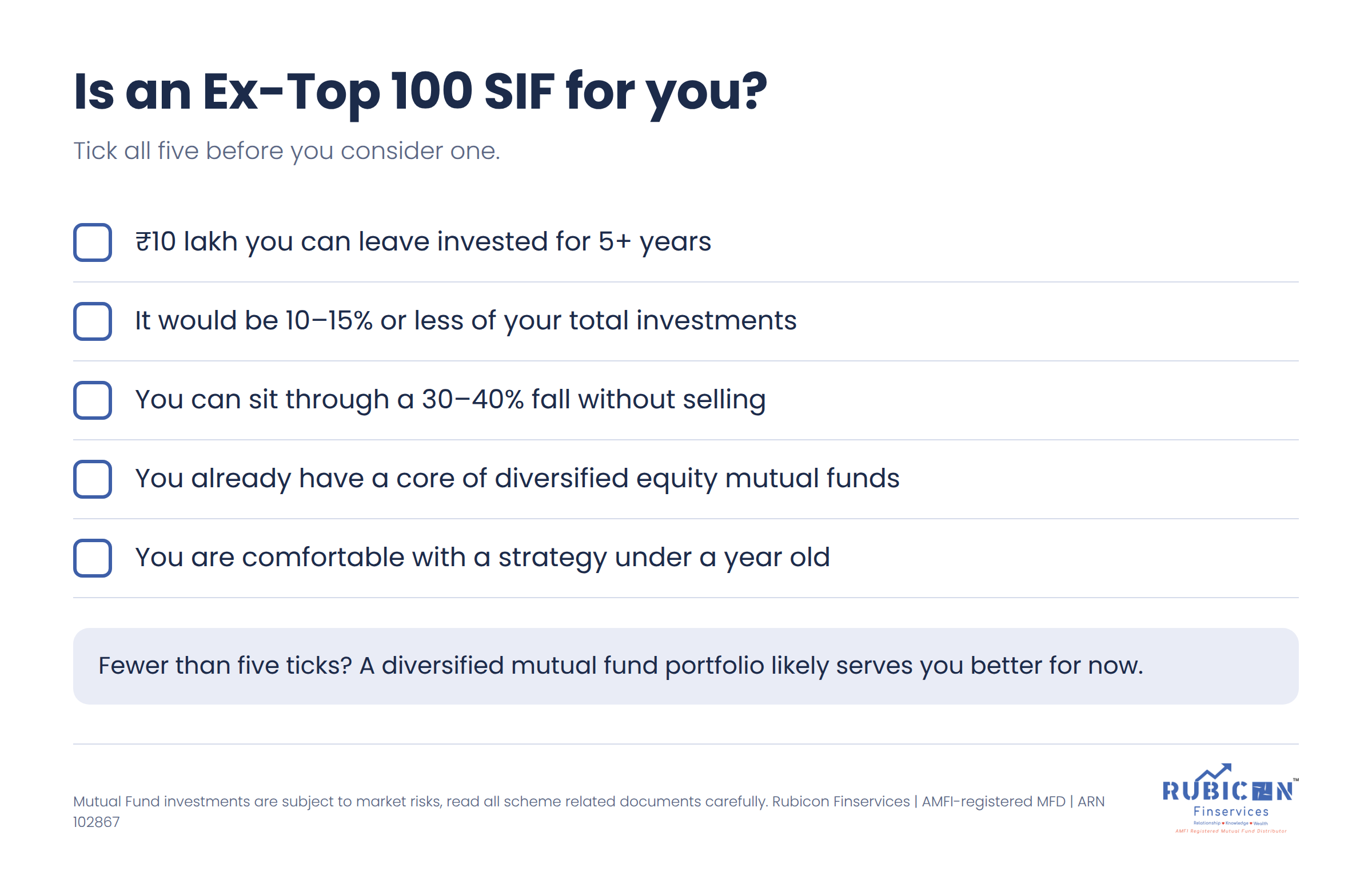
Answer these five questions honestly:
- Do you have at least ₹10 lakh you can set aside for five years or more, without needing it back?
- Would this be a small part, say 10–15% or less, of your total investments?
- Could you sit through a 30–40% fall in this investment without selling?
- Do you already have a core of diversified equity mutual funds?
- Are you comfortable backing a strategy with less than a year of history?
Thinking about a SIF?
I help investors decide whether a SIF fits alongside their existing mutual funds, and which category, not just which NFO.
Rohit Jain Bhansali,Founder,Rubicon Finservices
rjb@rubiconfinservices.com
ARN 102867 | Initial Registration 09-June-2015 | Valid till 01-07-2027 | SIF Valid till 15-03-2029 | APRN Valid till 17-10-2027 | APMI: APMI-APRN01145 | MSME: UDYAM-WB-14-0192124 | Grievance Officer: Prem Prakash Bhansali, complaints@rubiconfinservices.com
Mutual Fund and Specialised Investment Fund investments are subject to market risks; read all scheme and investment strategy related documents carefully before investing. SIF investments carry higher risk, including the use of derivatives and short positions, and require a minimum investment of ₹10 lakh per PAN. Past performance is not indicative of future returns. Rubicon Finservices is an AMFI-registered Mutual Fund Distributor and receives commission from Asset Management Companies for the schemes and strategies it distributes. This article is for investor education only and is not investment advice or a recommendation of any specific scheme or strategy. Figures in the illustrations are indicative.